

Once Upon a Trip — Traveling, but not the usual way
Meet Once Upon a Trip, an Auckland-based DMC crafting soulful, tailor-made journeys across New Zealand — from the overlooked Manawatu to wild Stewart Island and Blue Duck Station. Plus how Max Kubiak's team has used Toogo daily for nearly 15 years.
We travel with our DMCs — meet Once Upon a Trip (Auckland), by Max Kubiak.
Part 1 — Once Upon a Trip & New Zealand
Introduction to our DMC
Once Upon a Trip is a DMC based in Auckland since 2009, specializing in mid- to high-end tailor-made travel in New Zealand, with beautiful extensions to Fiji and Samoa — for those moments when the desire to trade alpine peaks for a turquoise lagoon becomes simply too strong (which we completely understand).
Our main markets? France, the United States, and the DACH market. Three demanding, curious markets that appreciate thoughtfully designed travel experiences — exactly like us.
Our philosophy can be summed up in just a few words, backed by many hours of work: genuine tailor-made travel, immersive experiences, and above all… journeys with soul.
Of course, we love the iconic highlights. But alive, never standardized. We reinterpret them, go around them, sometimes look at them from a different angle, and often against the current. All with carefully selected local partners, the kind who welcome our travelers like old friends: upon arrival at one of our partner accommodations, you are far more likely to be asked what you would like to drink than for your credit card at check-in.
Welcome to OUAT.
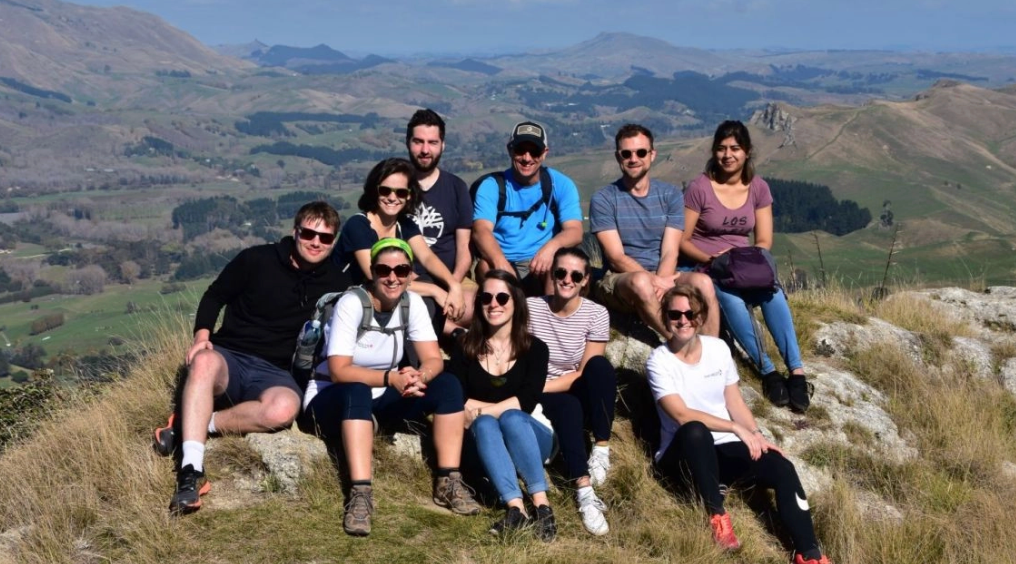
What we love most about New Zealand
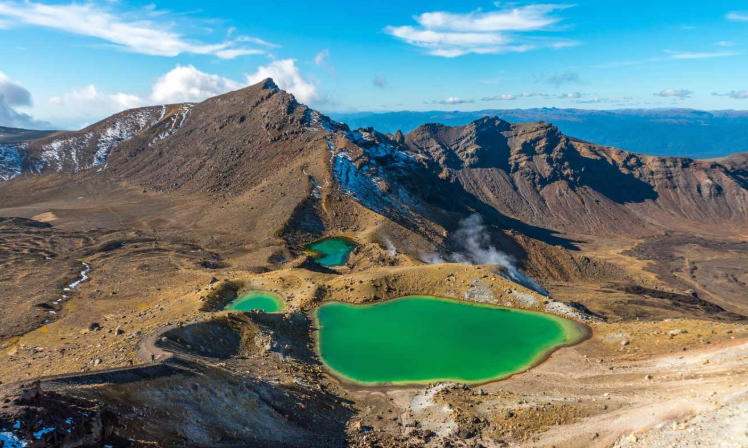
New Zealand is that rare feeling of total freedom. A country where every turn in the road makes you want to slow down, where you move effortlessly from fjords to volcanoes, from wild beaches to vineyards, with almost indecent ease.
It is vast, raw, preserved — sometimes spectacular, often emotional. Travelers arrive curious, leave amazed, and very often… come back again.
Because here, you don't simply "visit" New Zealand. You live it. And honestly, it's very easy to enjoy living it.
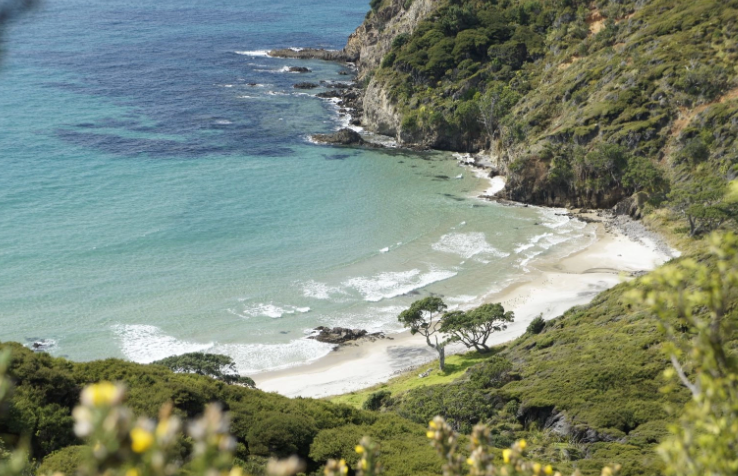
Our must-see experiences in New Zealand
The OUAT approach. We know classic New Zealand extremely well. We simply prefer the director's cut version. Yes, selling the country's backbone — the major highlights — works very well. And it always will.
But at OUAT, we especially love going where others don't:
- meeting passionate suppliers
- discovering off-the-radar experiences
- finding hidden gems often far more memorable than overcrowded attractions
- contributing to the development of certain places and regions
Regions & experiences. Take Manawatu, for example. Nestled between Tongariro (the national star) and Wellington (the capital), this region is far too often overlooked. Big mistake. Here, you stay in isolated lodges, observe the stars and glowworms, visit private farms, and meet local people. New Zealand relies heavily on its agricultural industry, a key sector that feeds far more than just its own population. Here, it's not explained in a brochure — it's explained on the ground.
Another favorite of ours: Stewart Island, the country's third-largest island, with only 25 kilometers of roads, often unfairly summarized as "there's nothing to do." For us, Stewart Island is not simply "the far south."
It means sleeping in a PurePod: a glass room in the middle of nowhere, without curtains, without neighbors, just panoramic nature all around. Spoiler: you'll spend more time looking at the sky than sleeping.
It means hiking part of the Rakiura Track, one of the country's wildest Great Walks. Here, there are no crowds in single file — just trails, forest, ocean… and the luxury of taking your time.
It also means having a drink and dinner at the local pub, the one where everybody already knows each other — and where you become "a local" after two beers.
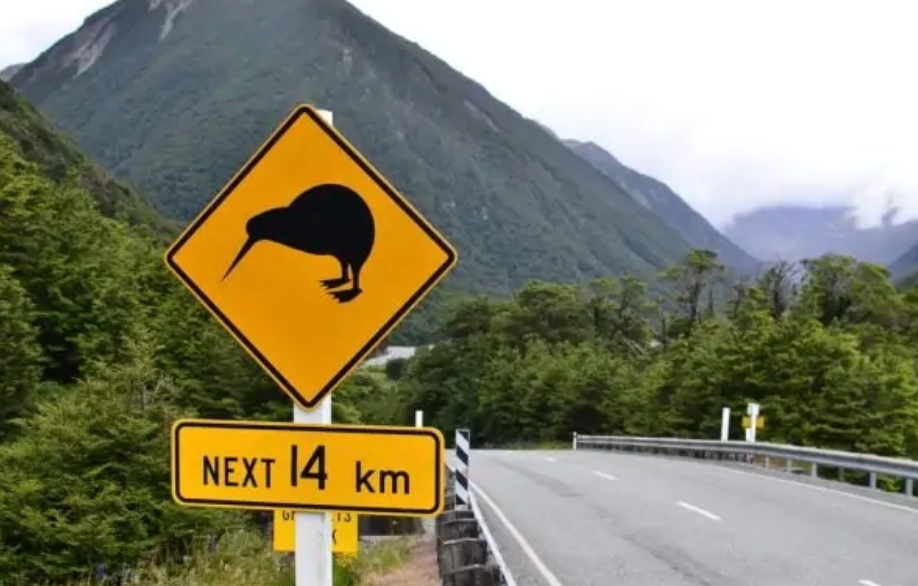
And then there is the highlight: going out after dark to spot wild kiwis. Yes, real kiwis. Sometimes even on the beach. Total silence, headlamp on, guaranteed thrill.
Facts & figures
New Zealand has around 5.3 million inhabitants — nearly eleven times fewer than Italy — despite both countries being of comparable size. Which means there is still a lot of space left to explore.
It has 13 national parks covering one-third of the territory, 14 fjords, a highest point reaching 3,724 meters (Aoraki/Mt Cook), 30,000 km² of wilderness, 23 dedicated cycling trails without cars, XXL lakes such as Lake Taupo (as large as Singapore), and unique wildlife including endemic species such as Hector's dolphin, the smallest dolphin in the world.
When it comes to wildlife, we also support genuinely committed operators, especially those involved in protecting the little blue penguin. Donations, concrete projects, field actions… we even went as far as sponsoring a habitat affectionately named Gotham City.
Because traveling is not only about discovering — it is also about respecting, protecting, and getting involved.
A few things to know before coming
- The seasons are reversed, with peak season running from November to March.
- People drive on the left (and we promise, you get used to it).
- There are three kinds of kiwis in New Zealand: the iconic bird, the fruit, and the nickname for the country's inhabitants.
Kiwis (the people) are lovely and often say "Sweet as" — a magical expression worth learning before arriving. It roughly means: no stress, everything's good, enjoy. But more importantly, it perfectly sums up the mindset you should embrace when traveling here. A true way of life… that our travelers usually adopt faster than expected.
Local quirks
Here, people often say "yeah" for yes and "nah" for no… but the most iconic expression remains the legendary "Yeah… but nah." A response that is both clear and completely nuanced — an art form in itself.
More seriously, New Zealand's greatest uniqueness lies in this rare combination of a highly structured Anglo-Saxon culture and a soul deeply rooted in the Pacific Islands. You find everything expected from a modern Western country — infrastructure, organization, high standards — while living at the rhythm of an island mentality, where people take their time.
Here, balance, well-being, and simple pleasures are highly valued. People work seriously without taking themselves too seriously, and most importantly, focus on what feels good. It's a lifestyle that quickly rubs off on travelers… and explains why so many leave thinking they could easily stay a little longer.
New Zealand: much more than a campervan destination
New Zealand is still too often reduced to a road-trip campervan destination. A practical image, certainly, but a reductive one — and far removed from the way we envision travel at Once Upon a Trip.
Why? Because when limiting yourself to this way of discovering the country, you often remain external to the place you are traveling through. You admire the landscapes, but miss the essentials: the encounters, the conversations, the local stories that give the destination its depth.
Staying in carefully selected B&Bs, character guesthouses, or lodges instead allows travelers to connect with locals, share a table, a moment, a conversation. In other words, to truly experience New Zealand rather than simply crossing through it.
New Zealand: a luxury destination that remains underestimated
Another persistent misconception is that New Zealand is not a luxury destination. In reality, it is simply poorly known for it.
Few travelers realize that New Zealand — 29 times smaller than Australia — is home to 25 officially recognized Luxury Lodges and 3 Relais & Châteaux properties, compared to 20 Luxury Lodges and only 2 Relais & Châteaux in Australia.
A ratio that speaks for itself. Here, luxury is experienced differently: discreet, intimate, ultra-immersive, rooted in nature and in place rather than ostentation. If you are looking for exceptional hospitality, silence, space, and a genuine destination experience, New Zealand clearly deserves consideration.
Luxury beyond classifications: Blue Duck Station
Some experiences go far beyond any official classification. Blue Duck Station is the perfect example.
This private property of more than 7,000 hectares, located on the edge of Whanganui National Park, offers total immersion in a wild, isolated, and spectacular New Zealand. Here, there is no artificial scenery: luxury lies in space, isolation, and authenticity.
Activities are deeply connected to the location: hiking through untouched landscapes, jet boating on the river, fishing, horseback riding, observing endemic wildlife, and immersion in a farm committed to protecting the Blue Duck (Whio), one of the country's emblematic species.
Accommodation capacity is intentionally limited, with only a few high-end lodges and pods perfectly integrated into the environment. Some offer spectacular views of the Tongariro and Taranaki volcanoes on clear days.
The restaurant, perched at the top of the property and welcoming a maximum of 12 guests, is an experience in itself: sincere local cuisine served in a timeless setting, where the panorama is just as important as the plate itself.
Here, luxury is not measured in stars, but in emotions, silence, and connection to the place. And this is exactly the kind of experience we love showcasing at OUAT.
And then there are those simple but deeply memorable moments. Sharing a beer with the property owner at sunset, as the day slowly comes to an end and the landscape takes on another dimension. Nothing staged, just an exchange, a suspended moment. For many travelers, this becomes one of the strongest memories of the entire trip.
That too is luxury in New Zealand: time, space, and meaningful encounters.
Part 2 — Toogo & daily use
Working with Toogo
Toogo is our everyday tool. It is a bit like the nervous system of our business: what connects everything we carry in our heads (ideas, constraints, numbers) to the core of our work (travel, service, people). Without it, the information would still exist… but it would circulate far less efficiently.
We have been using Toogo for nearly 15 years. In other words, this is not a phase, nor a technological fling: it is a long-term relationship, tested both in good times and during intense rush periods (the ones where everything needed to be done yesterday). And because we don't keep good things to ourselves, we have also recommended Toogo to several DMCs — which, in our industry, is almost a declaration of love.
Toogo is a complete and powerful tool, especially when it comes to pricing calculations. Yes, the heart of the battle. Not the most glamorous part of the job, but clearly the one that prevents grimacing when opening an Excel file at 11 PM. Everything is centralized, logical, and structured. The result: less mental gymnastics, more clarity, and far fewer human errors (the kind that discreetly slip in when juggling between 12 tabs).
But where Toogo truly stands out is on the human side. The team genuinely listens. Ultimate proof: there is a WhatsApp group with users. Yes, a real one. Very few software companies can say the same — especially without running away after two messages. We exchange ideas, challenge each other, improve together. It is not a support ticket disappearing into the void: it is a dialogue.
Toogo in daily life
With the arrival of agentic AI, Toogo is reaching a new level. We are no longer simply using a tool — we are beginning to get things done through the tool. Toogo is clearly aligned with the times, asks the right questions, and most importantly, frees up time.
This time is then dedicated to what truly makes the difference for a DMC: creativity, service, assistance, fieldwork, scouting, encounters. In short, everything LLMs cannot experience on your behalf. And honestly, that is also how we continue to outperform the machine.
Concretely, Toogo helps solve around 50% of daily operational challenges: creating an itinerary, formatting it, pricing it, booking it, invoicing it, and sending a clear and coherent travel booklet.
The remaining 50%? That is you. Your style, your standards, your attention to detail, your professionalism. And thankfully so, because otherwise we would get a little bored.
Finally — and this is far from anecdotal — Toogo goes far beyond a simple turnkey tool. The teams behind the software ask real questions, look far ahead, and above all, deeply understand the DMC business. They do not speak about an industry they observe from afar: they are part of it. It is precisely this combination of field understanding, technological vision, and industry common sense that makes Toogo so strong.
Our advice to other DMCs
Toogo enables DMCs to improve performance while approaching daily operations with greater peace of mind. Together, let's evolve the tool to help the entire profession progress: what if the future of the industry were built collectively?