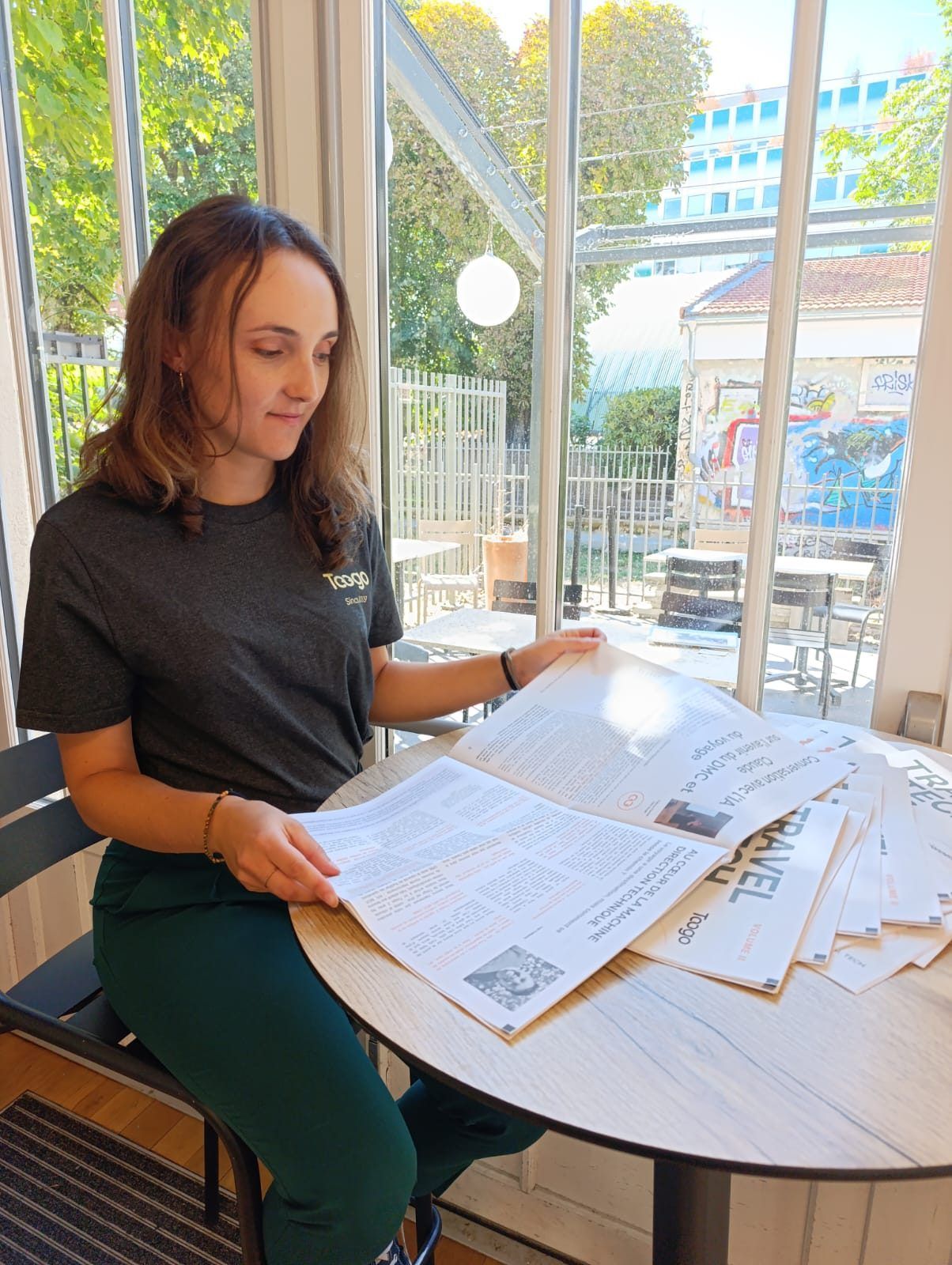

From La Paz to the new CRM: Alice’s fresh eye, a TOOGO engineer
An engineer on TOOGO's dev team, based in La Paz, Alice talks about AI in her daily work, the feature she's most proud of, and building the new CRM.
Hi, I'm Alice, I'm 26 and I'm an engineer on the TOOGO development team. So yeah, it's a bit of an unexpected intersection. The intersection point is La Paz, in Bolivia.
I had a first experience in Bolivia where I didn't work as an engineer at all, and afterwards I wanted to stay in Bolivia while getting closer to a job in tech. So while searching, I stumbled upon TOOGO: part of the team was working in an office really ten minutes from my place. And by serendipity, as Fabrice would say, things have a way of working out — and I was lucky, because in February 2024 I started working with the TOOGO team in La Paz. So I dove back into lines of code, software architecture, and all the research surrounding artificial intelligence.
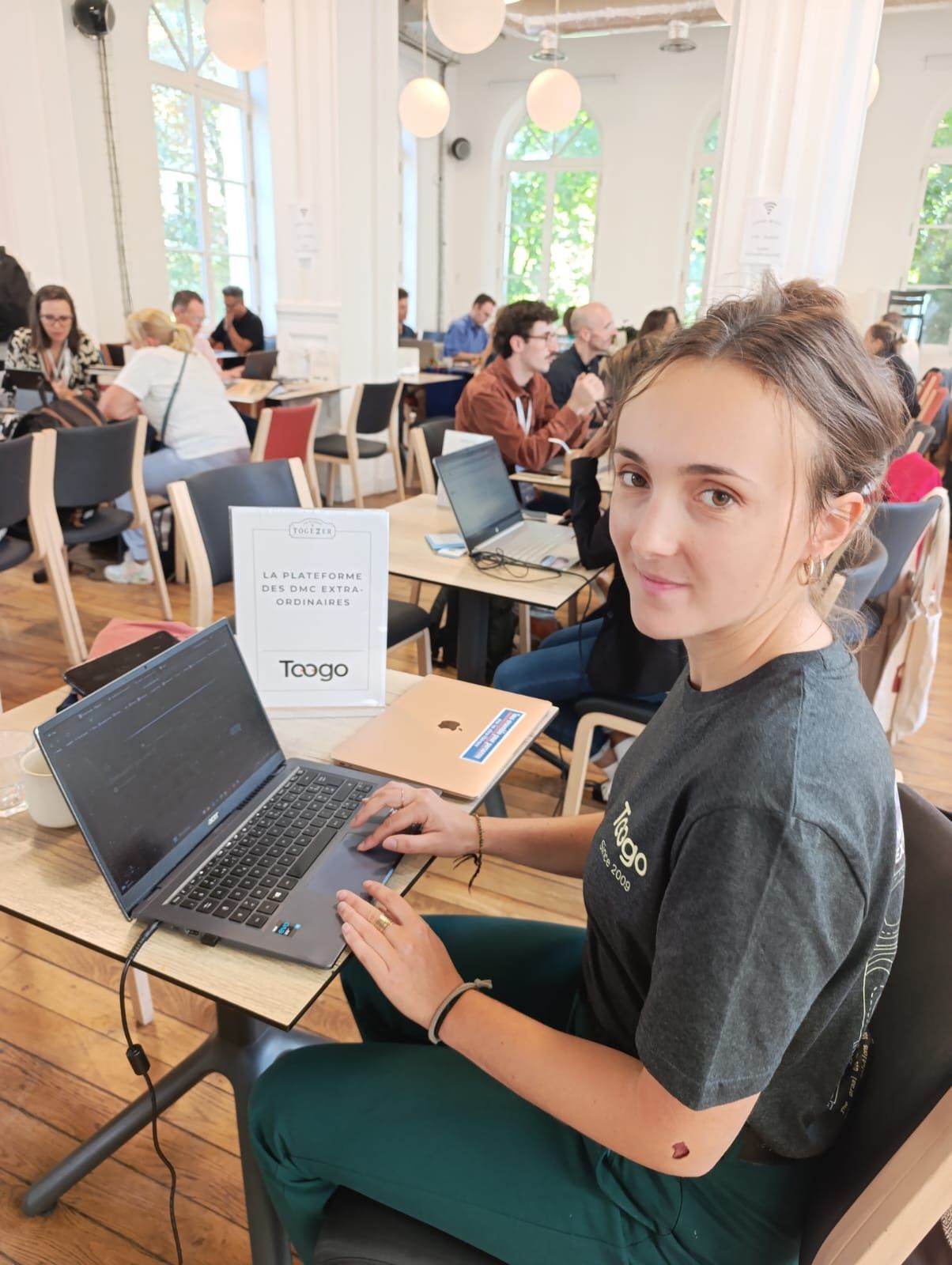
AI in daily work, and Claude Code
Since I started at TOOGO, I've been using AI daily, but what has really changed the way I work, fundamentally I think, is clearly the release of Claude Code.
Now, the main skill is knowing exactly what you want, explaining it well, and verifying the consistency of what's produced, instead of knowing how to directly touch the lines of code like we were still doing last year.
What I stay cautious about
There are two things I remain cautious about. First, data privacy. We don't always pay attention to that little 'Allow training on my data' checkbox, where sometimes we're just tempted to go fast and dump information we don't want circulating. But for now, unfortunately, the reliable way to preserve your privacy is to pay.
Next, I also try to be mindful of the impact of using AI. Even while using it every day and all day at work, I rarely hit my usage limits, because I make sure to be precise, avoid making ten requests, and craft my initial prompt carefully.
A local guide can't be replaced
I think it's not necessarily up to AI to understand that a local guide is irreplaceable, but rather up to the travellers themselves. It's true that in a place like Bolivia, if you ask AI to plan a trip for you, it will base it on what's available online. And in the case of Bolivia, there are many important things that are passed on in other ways, which you have to learn through other means, because you can't find them with a simple search on travel sites.
And once you're there, it's the same thing: it's not AI that helps you understand the territory, the people, and the unexpected. So I am convinced that being guided by someone who knows a territory that you don't is irreplaceable by any algorithm.
The feature I'm most proud of
The feature I'm most proud of, for now, I think is the tariff autofill, even though there are still some issues to iron out. The goal was to cover as many cases as possible, while knowing that there would still be gaps.
To explain it quickly, it's a feature that allows you to fill in a product's cost structure from a hotel rate sheet, for example. So the seasons, costs per room, supplements, and options are detected, previewed, and then saved into the database after validation. It saves you from having to enter the information by hand.
I think it really matters to the users, mainly because I've seen the positive feedback. It's nice to see that it's being used and appreciated. I can also see it in the usage and the API costs, which represent the number of requests made to the AI for this part. I think it represents a huge time saver for filling out the database, specifically for updating products.
My job in five years
In five years, my ideal job… that's a complicated question. For starters, during my studies, I wouldn't have been able to predict what I'm doing today. That didn't exist. So I operate on the principle that in five years, it will be the same. If I stay in the tech field, I don't know what I'll be doing. Maybe it doesn't exist yet, maybe we can't even imagine it.
Building the new CRM
Right now, I'm working on building the new CRM. So it's a big deal, because the CRM is often seen as the core of TOOGO. And what I find interesting in my position is that I'm contrasting Fabrice's vision — who designed the system, who knows where we come from and where we're going — with my perspective as a novice. Since I don't have the habits of the DMC business, that's perhaps where my usefulness lies: because what I get stuck on is what needs to be worked on and improved. What seems fuzzy to me is what isn't yet clear enough for a new user. And with good communication with my colleagues who are more expert, I manage to understand the essentials.
Ultimately, it's been two months since I started working on CRM 2 — and I've been dragging my feet on finishing this podcast, by the way. So I'm now on the group screen, and we're moving forward internally on work that isn't visible yet: shaping the long-awaited TOOGO, with a fresh, brand-new interface and functionality.
How we work
To summarize how we work: Juan is the architect who set up the entire environment we're working on. He's the one constantly checking the architecture and making sure we're following his plan, handling the big chunks and the complex parts. Huáscar, another Bolivian colleague, is also in charge of implementing global features, while I work on the CRM 2 interface, and then the connection and linking to the data and certain functionalities. On the other hand, Pierre is the ergonomics expert: he's the one who reviews and improves our work.
Now, we're already working on other screens, because the foundations were laid thanks to CRM 2. It's exciting to work on a new interface. Everything is really better. You have to think practical, simple, efficient. I'm really looking forward to it being accessible to all TOOGO users. I am honestly quite sure that they are really going to like it.